Puzzles as Tools for Enhancing Problem-Solving Skills
The Significance of Engaging with Puzzles
In today’s fast-paced and multifaceted world, the necessity for strong critical thinking and problem-solving abilities is more pronounced than ever. Approaching challenges through the lens of puzzles not only serves as a source of entertainment but also acts as a potent catalyst for cognitive growth. Engaging with various forms of puzzles calls upon different facets of our brain, fostering developmental skills that are invaluable both in personal and professional contexts.
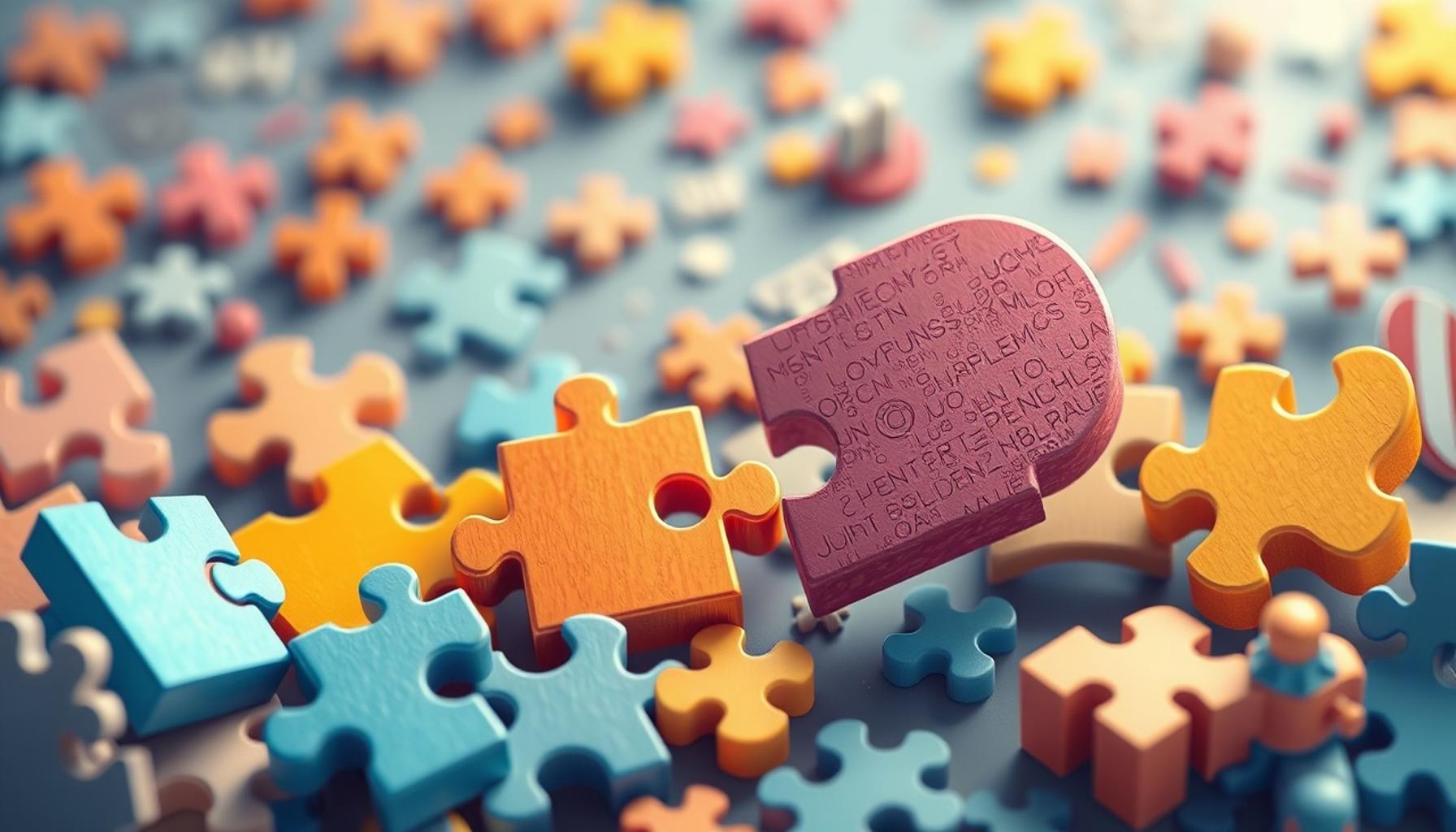
The wide array of puzzles available today can serve as tools for enhancing our cognitive abilities. Each type engages the brain in distinct yet complementary ways. For instance, consider the popular jigsaw puzzles. These visual challenges not only aid in developing spatial reasoning—the ability to understand and manipulate shapes and spaces—but they also enhance our capacity for holistic thinking. As one pieces together a complex image, they must think critically about how individual segments fit into a larger whole, a skill that is transferable to real-life problem scenarios where components must work in unison.
Logic puzzles, on the other hand, present a different kind of challenge. They require individuals to analyze information methodically, weighing potential solutions based on provided clues. Classic examples include Sudoku and various grid-based riddles, which demand not just analytical skills but also a capacity for structured thinking. Engaging with these types of puzzles can sharpen decision-making abilities and promote clearer reasoning, essential in navigating both academic and workplace environments.
Crossword puzzles take a different route by enhancing vocabulary and encouraging lateral thinking. Completing a crossword not only strengthens language skills but also fosters creativity, challenging individuals to make connections between seemingly unrelated clues. This aspect of cognitive engagement is particularly beneficial in enhancing communication skills, an important asset in both personal and professional relationships.
Research underscores the cognitive benefits of regular puzzle engagement, noting that those who regularly tackle these challenges often develop enhanced focus and patience. These attributes are crucial for effective problem-solving, allowing individuals to navigate complex tasks with greater ease. Studies have shown that people who solve puzzles frequently exhibit improved memory functions and mental flexibility, qualities that can significantly boost both academic and career success.
As we explore the realms of puzzles further, it becomes evident that they also harbor psychological benefits, promoting stress relief and providing a healthy outlet for mental energy. Consequently, incorporating puzzles into daily routines can lead to significant improvements in cognitive abilities and emotional well-being. From a simple jigsaw puzzle on a Sunday afternoon to a challenging logic game during your lunch break, the options are boundless. Discovering the right puzzle for yourself might just unveil a new path to sharpen your mind and enhance your problem-solving prowess.
DIVE DEEPER: Click here to discover the impact of logic puzzles
Diverse Puzzle Types and Their Cognitive Benefits
Puzzles come in a multitude of formats, each unique in how they challenge our mental faculties. This diversity not only ensures that there is something for everyone but also allows individuals to select puzzles that resonate with their personal skills or areas they wish to improve. Here are some of the most popular puzzle types and the specific cognitive benefits they offer:
- Jigsaw Puzzles: As stated earlier, jigsaw puzzles enhance spatial reasoning and holistic thinking. They also promote patience and focus, as one must sit and concentrate on finding where each piece fits. Completing a jigsaw can be a gratifying achievement, reinforcing the notion that perseverance pays off, a critical mindset for problem-solving.
- Logic Puzzles: When engaging with logic puzzles such as Sudoku or logic grid puzzles, individuals sharpen their analytical skills. This type of puzzle requires players to systematically work through the information provided, fostering a structured approach to uncovering solutions. Most often, these puzzles encourage a trial and error approach, teaching that failure is merely a step towards arriving at the correct answer.
- Crossword Puzzles: Crossword puzzles require lateral thinking and a rich vocabulary, which primes the brain for creative problem-solving. These puzzles challenge individuals to connect ideas and make associations that they might not consider in their day-to-day thinking. The act of searching for synonyms or completing phrases expands one’s cognitive leaps, enhancing communication prowess.
- Word Searches: While seemingly simple, word searches actually cultivate pattern recognition skills and attention to detail. These puzzles require one to focus on specific letters while ignoring distractions, honing concentration—a skill that carries over into other tasks, especially those demanding sustained attention.
- Mathematical Puzzles: Engaging with mathematical puzzles, like brain teasers or riddles that require a numerical solution, improves numeracy and logical thinking. These puzzles often necessitate creative approaches to reach a conclusion, fostering a flexible mindset that is essential in tackling complex problems across various fields.
The engagement with these diverse types of puzzles showcases their multifaceted benefits in enhancing problem-solving skills. Each type plays a critical role in developing essential mental attributes that help individuals tackle both straightforward and complex challenges. While some may excel in traditional logic puzzles or language-based challenges, others may find their strength in visual and numerical puzzles.
Beyond sharpening cognitive abilities, puzzle-solving also boosts emotional resilience. Completing a challenging puzzle can give a sense of accomplishment that elevates mood and builds confidence. This psychological uplift is crucial in real-world problem-solving situations where self-efficacy can often influence the outcome. With continued engagement in puzzle-solving, effectively handling stress becomes easier, allowing individuals to approach challenges with a clear mind and revitalized enthusiasm.
In tandem, the cognitive and emotional benefits of puzzles converge, manifesting as improved overall problem-solving abilities. Whether through developing a sharper mind or fostering resilience, engaging with puzzles proves to be a worthwhile endeavor for anyone looking to enhance their skill set in today’s dynamic world.
| Types of Puzzles | Advantages |
|---|---|
| Logic Puzzles | Enhance critical thinking by requiring deducing relationships and patterns. |
| Crossword Puzzles | Boost vocabulary and language skills while solving clues. |
| Jigsaw Puzzles | Improve spatial awareness and visual manipulation capabilities as pieces come together. |
| Math Puzzles | Develop numerical skills and help in understanding quantitative information. |
| Puzzle Games | Promote teamwork and collaboration through engaging group activities. |
Exploring various types of puzzles reveals the intricate ways they can enhance problem-solving skills. Each type, from logic puzzles to math challenges, serves a distinct purpose, fostering a unique set of cognitive abilities. Engaging with these brain teasers not only sharpens mental acuity but also cultivates persistence and resilience—qualities essential for tackling complex problems in real life. Furthermore, regular puzzle-solving can contribute to long-term cognitive health, proving the valuable role these simple yet profound tools play in personal and intellectual development. As we delve deeper into the world of puzzles, the interconnected benefits become increasingly apparent, inviting readers to uncover more about how these tools can reshape their thinking processes.
DIVE DEEPER: Click here to discover how logic puzzles enhance critical thinking
The Social Dimension of Puzzle Solving
While the cognitive enhancements that puzzles can provide are evident, their social aspects are equally significant in fostering problem-solving skills. Engaging with puzzles is not solely a solo endeavor; they often provide opportunities for social interaction, collaboration, and teamwork. Whether huddled around a jigsaw puzzle with family members or competing to finish a crossword in a group, the social dynamics of puzzle-solving can enrich the experience and lead to further cognitive benefits.
For instance, during family gatherings or game nights, team-based puzzles can stimulate communication skills as participants share ideas, negotiate differences, and strategize collectively. This collaborative problem-solving can significantly enhance interpersonal skills, as individuals learn to articulate their thoughts clearly, listen effectively, and appreciate the diverse perspectives offered by their teammates. Studies have shown that collaborative problem-solving not only sharpens analytical skills but also cultivates leadership qualities and emotional intelligence.
Moreover, online puzzle platforms have emerged, connecting puzzle enthusiasts across geographical boundaries. These platforms allow players to engage in friendly competitions or work together on challenging problems in real-time, fostering a sense of community. Virtual puzzle-solving has surged in popularity, particularly in recent years, with games like online escape rooms and collaborative Sudoku competitions bringing people together from all walks of life. These interactions not only enhance problem-solving skills through shared knowledge and diverse strategies but also build lasting friendships and networks, exposing individuals to different ways of thinking.
The Role of Puzzles in Education
Puzzles have also found a prominent place in educational settings, where they are deployed as effective teaching tools. Educators have increasingly recognized that integrating puzzles into the curriculum can boost students’ critical thinking and problem-solving abilities. For example, in mathematics education, using puzzles encourages students to tackle complex equations through engaging methods, making the learning process more enjoyable and less intimidating.
Research indicates that when students tackle puzzles, they often experience a higher level of engagement, resulting in a better retention of concepts. Project-based learning techniques further leverage puzzles by framing real-world problems as puzzles for students to solve, encouraging them to apply classroom knowledge to practical scenarios. This approach is particularly beneficial in STEM education, where fostering an innovative mindset is crucial.
- Robotics Challenges: Many schools have introduced robotics competitions that combine programming with puzzle-solving. Students are tasked with designing robots to complete specific challenges, which not only fosters technical skills but also enhances their ability to devise creative solutions under pressure.
- Escape Room Learning: The concept of escape rooms has transcended entertainment and entered educational spaces. These activity-based puzzles compel students to work collaboratively to decipher clues, encouraging teamwork and enhancing their analytical skills in a fun, immersive environment.
In light of these multifaceted applications, puzzles emerge as versatile tools that go beyond mere recreation. Whether through cultivating social connections, enhancing educational experiences, or fostering collaboration in various settings, puzzles serve as a dynamic method for enhancing problem-solving skills. Their ability to engage individuals cognitively, socially, and emotionally underscores their significance in today’s rapidly evolving world, making them an invaluable resource for anyone looking to sharpen their skills.
DIVE DEEPER: Click here to learn more
Conclusion: The Unmatched Value of Puzzles in Problem-Solving
As we delve into the intriguing world of puzzles, it becomes clear that their function extends well beyond mere entertainment. They serve as invaluable tools for enhancing problem-solving skills across various dimensions of life. From strengthening cognitive abilities, such as analytical thinking and creativity, to fostering social interaction and cooperation, puzzles create a multifaceted environment that nurtures critical skills essential for success in both personal and professional arenas.
The incorporation of puzzles in educational settings has proven highly effective, developing students’ critical thinking while facilitating engaging learning experiences. Techniques like project-based learning and interactive robotics challenges provide students with the opportunity to connect theoretical knowledge with practical application, enhancing both retention and interest in complex subjects.
Furthermore, the social aspect of puzzle-solving brings individuals together, promoting collaboration and innovative solutions through shared experiences. Whether through interactive game nights or the rise of online platforms, puzzles are a gateway to building meaningful connections while honing essential skills. This community-driven approach not only enriches our problem-solving capabilities but also fosters camaraderie and teamwork.
In conclusion, the myriad benefits that puzzles offer make them an indispensable resource for anyone aiming to enhance their problem-solving skills. As we navigate a world filled with challenges and complexities, embracing puzzles can equip us with the tools necessary to tackle problems with confidence and creativity. Encouraging engagement with puzzles can transform learning, social interactions, and cognitive development, ultimately leading to a more innovative and adaptable society.